

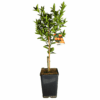
Description
(Fortunella crassifolia ‘Meiwa’)
The Meiwa is a somewhat lesser-known cumquat, but don’t let that fool you; it’s quickly gaining popularity because it’s so good.
When people think of sweet cumquats, they often go straight for Nagami and we don’t blame them. However, Meiwas are actually pretty similar! More recently, it’s been noted they may be a hybrid of Nagami and another cumquat variety called ‘marumi’.
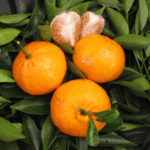
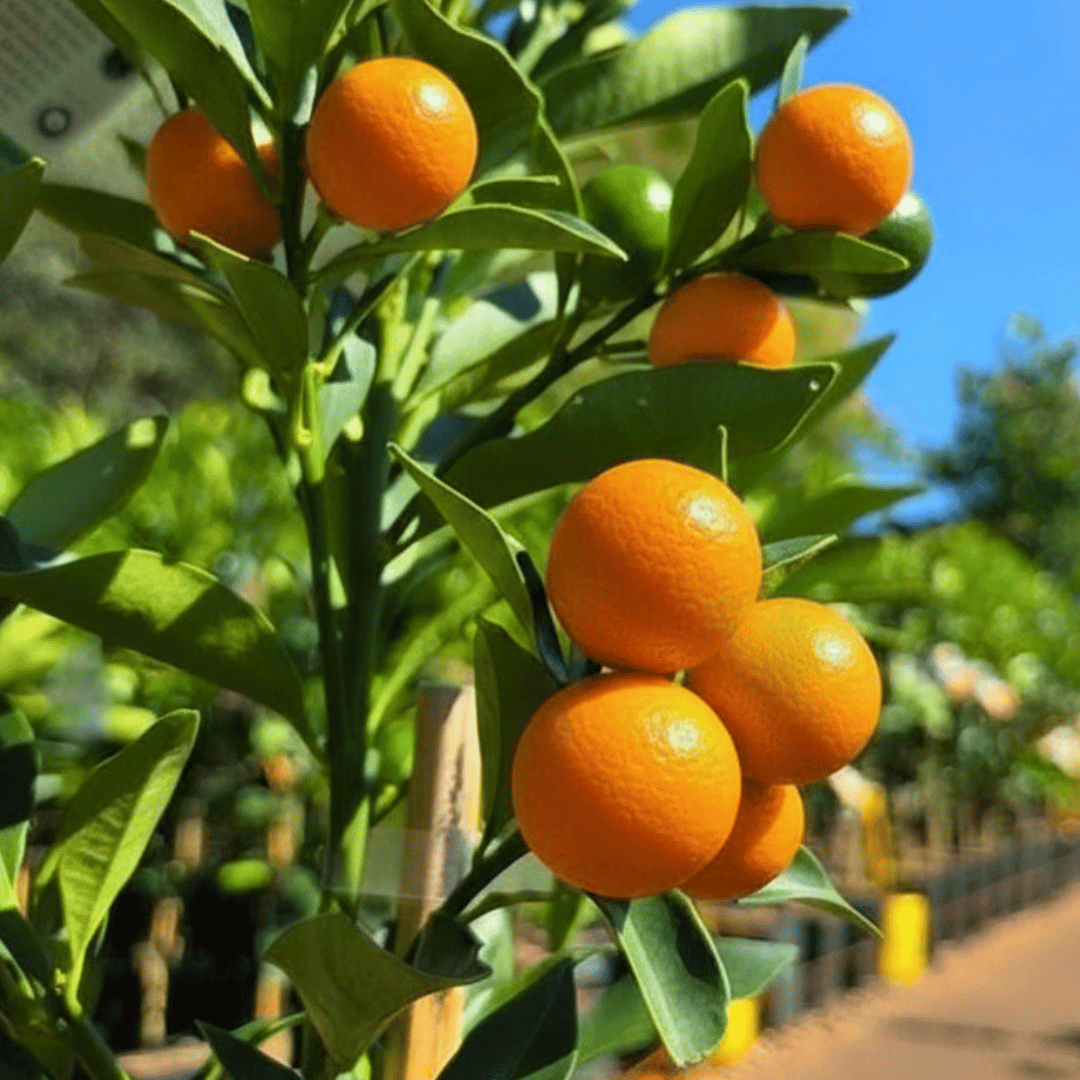
Meiwa’s fruit are pretty round in shape, though usually with a bit of an oblong shape near the top.
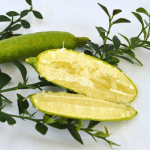
These amazing little fruits are eaten whole with the skin being the sweeter part, while the flesh is a little on the tart side. This is always a really fun little flavour combination, in our opinion.
Interestingly, Meiwa cumquats have a slightly thicker skin than their Nagami cousins, which can make them seem even sweeter by comparison.
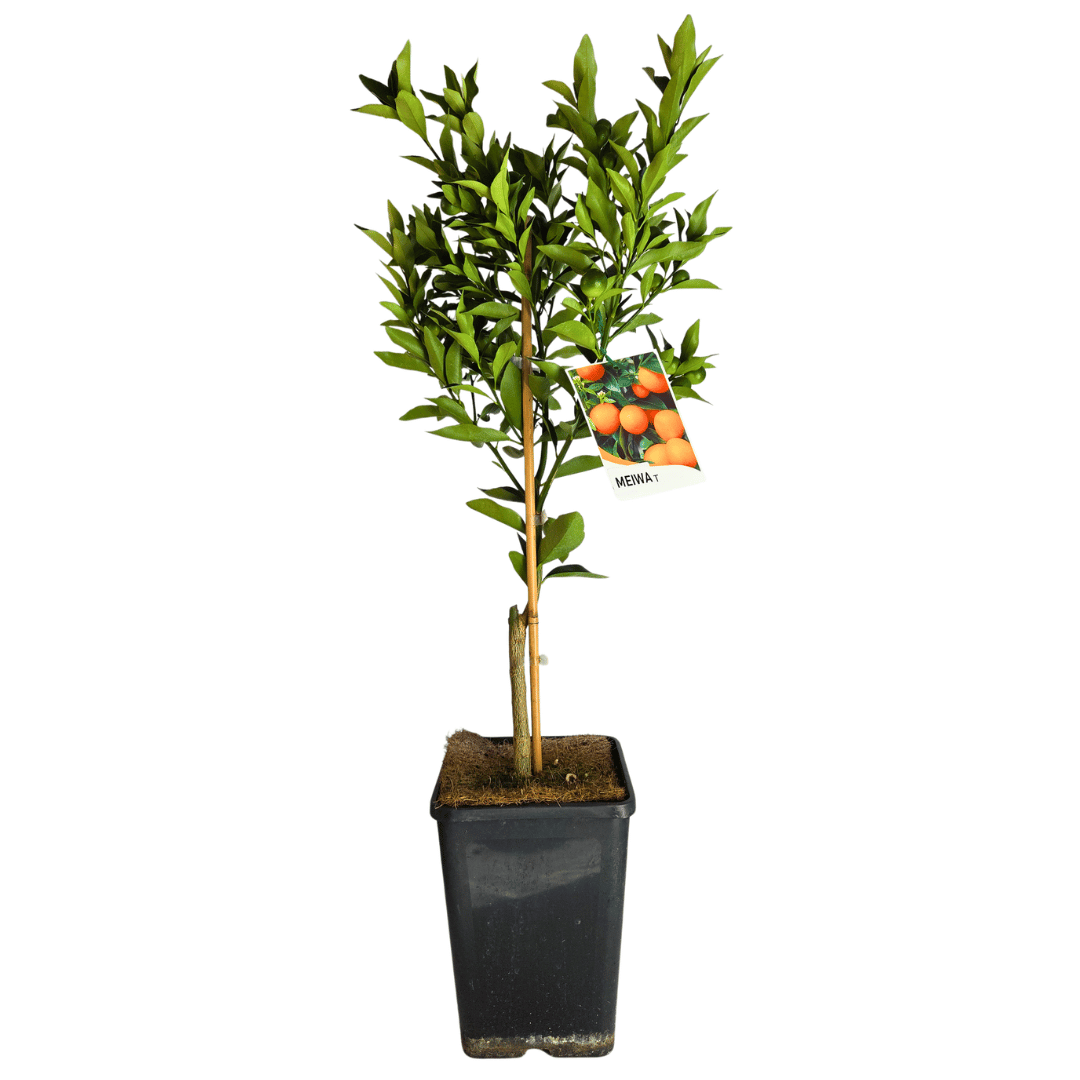
In terms of the tree itself, it can be a very good producer if well-fed. It’s a pretty upright and compact grower, though it can be a little on the slower side. This makes them a really great option for smaller gardens or for keeping in a decent sized pot.
They have a beautiful, narrow, dark green leaf with a naturally dense canopy that will thicken up with regular pruning.
Meiwa has a decent cold tolerance, thanks to its origins in China and Japan, going semi-dormant over the winter months.
Due to this, it does take a little longer for the tree to wake up once the warm weather hits, but a little fertiliser will go a long way.
Again, due to their over-wintering habits, they tend to flower a little later than other citrus, usually toward the end of spring or early summer, with the fruit ripening through autumn and winter.
For our citrus care recommendations, please check our Help & Advice page!

 Arnold Blood Orange - 200mm Pot